Boiler Replacements & Installs in Denver
High-Efficiency Condensing 96%+ (AFUE) Boiler Replacements:
High-efficiency condensing boiler replacements upgrade outdated heating systems with modern equipment capable of achieving 96%+ AFUE, dramatically improving performance and reducing fuel consumption.
These boilers extract additional heat from exhaust gases through a condensing process, allowing them to operate at much higher efficiencies than traditional cast iron or atmospheric units. When paired with properly designed hydronic systems—especially low-temperature emitters like radiant floors or panel radiators—they deliver exceptional comfort and long-term energy savings.
Condensing boilers also feature advanced controls, modulation, and outdoor reset capabilities, adjusting output in real time to match the heating demand. This results in longer run times, fewer cycles, and more consistent indoor temperatures.
Key Benefits:
-
Up to 96%+ AFUE for maximum efficiency
-
Lower gas usage and reduced operating costs
-
Advanced modulation and outdoor reset control
-
Compact, wall-hung or floor-mounted options
-
Cleaner combustion and reduced emissions
A high-efficiency boiler replacement brings modern performance, comfort, and reliability to a hydronic system that was built around older equipment.

Before

After

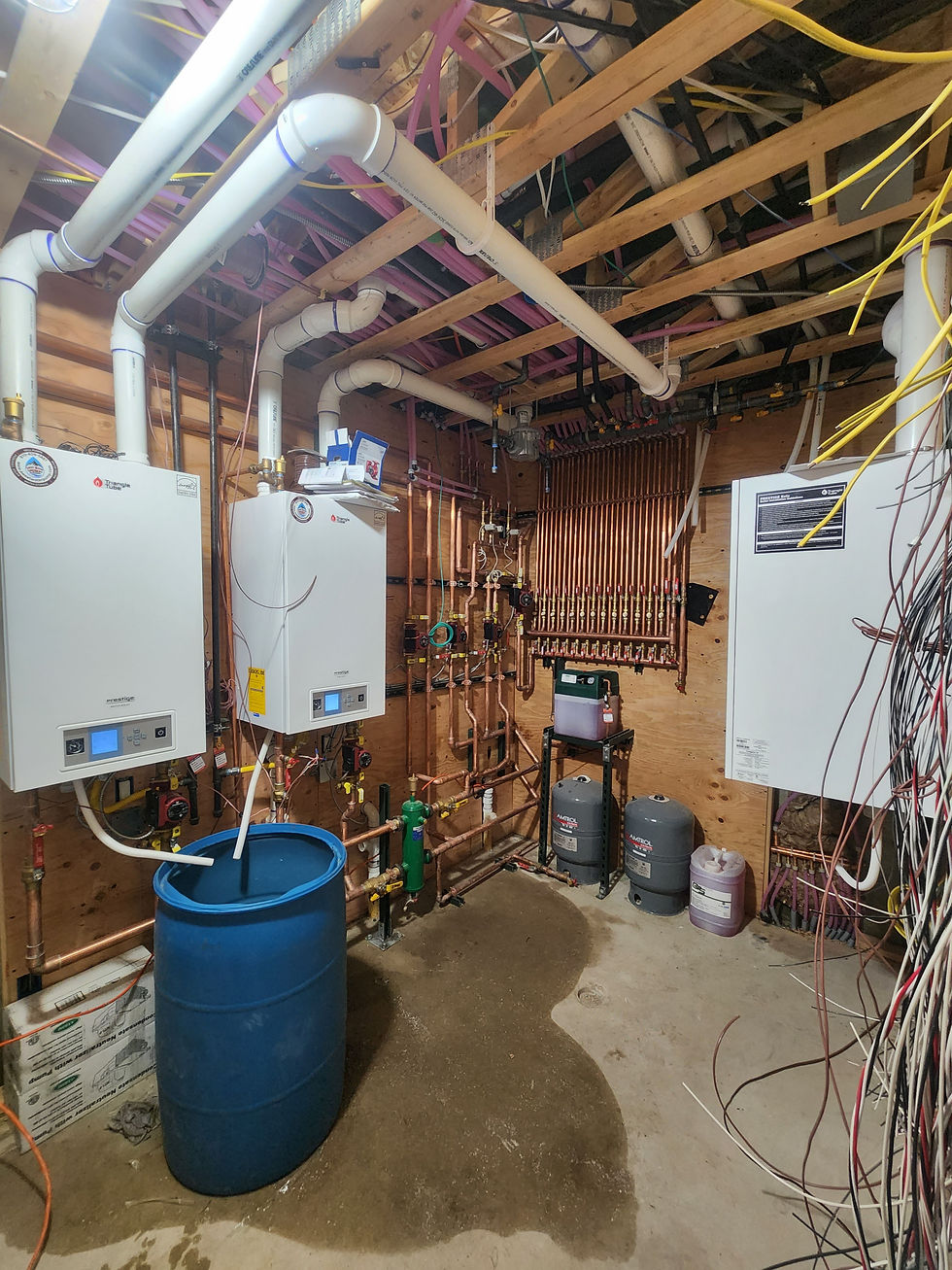
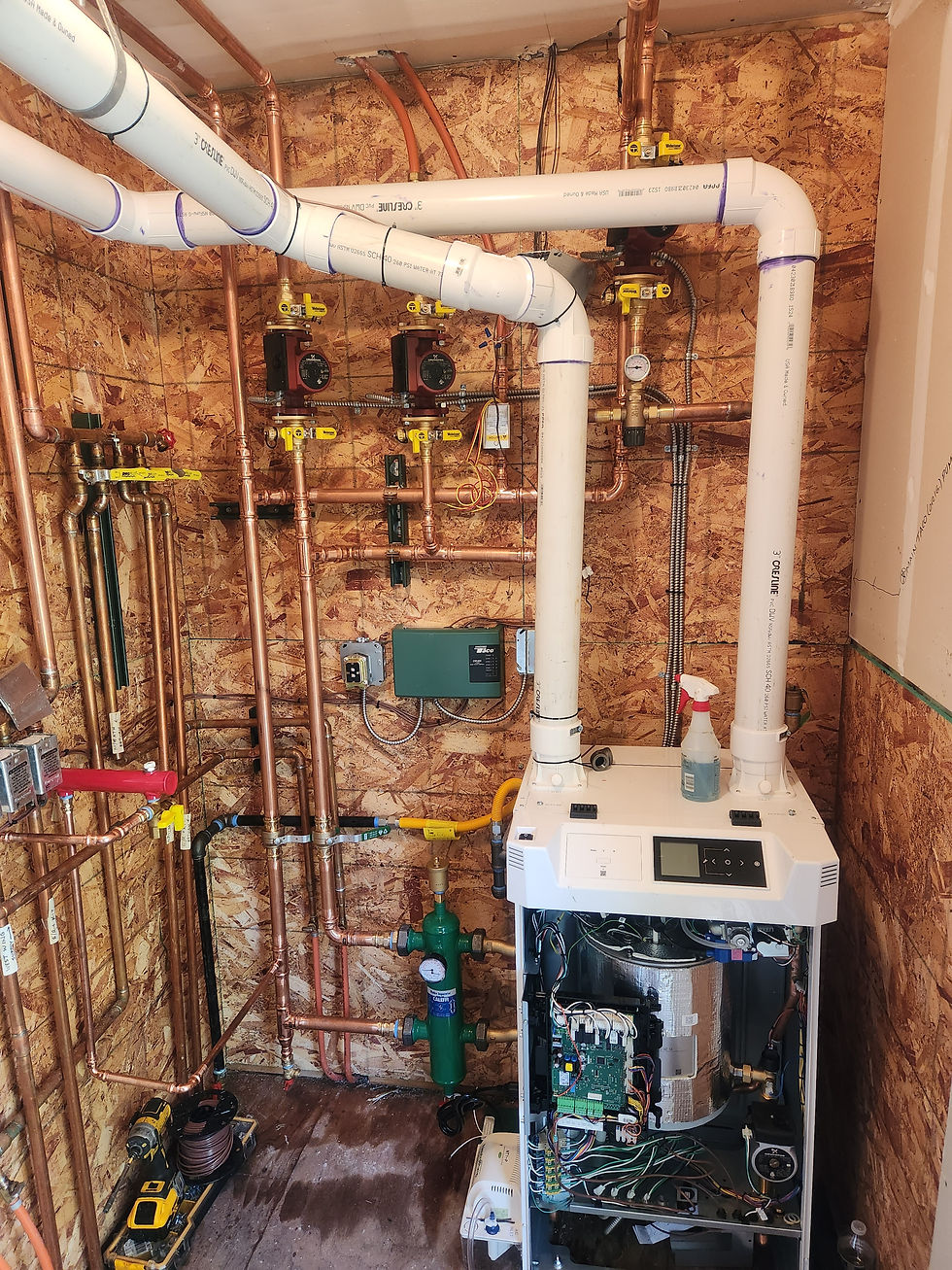


Before
After


Standard Efficiency Cast Iron Boilers:
Standard efficiency cast iron boilers are a time-tested, durable solution for hydronic heating systems. Known for their longevity and reliability, these boilers typically operate in the 80–85% AFUE range and are well-suited for high-temperature systems like baseboard and older radiator applications.
Built with heavy cast iron heat exchangers, they are extremely robust and tolerant of varying system conditions, making them a strong choice for replacements in existing systems where simplicity and proven performance are key.
Key Benefits:
-
Long lifespan with proven reliability
-
Ideal for high-temperature distribution systems
-
Simple operation and easier serviceability
-
Lower upfront cost compared to condensing boilers
While less efficient than modern condensing equipment, cast iron boilers remain a dependable and practical option when properly applied and installed.
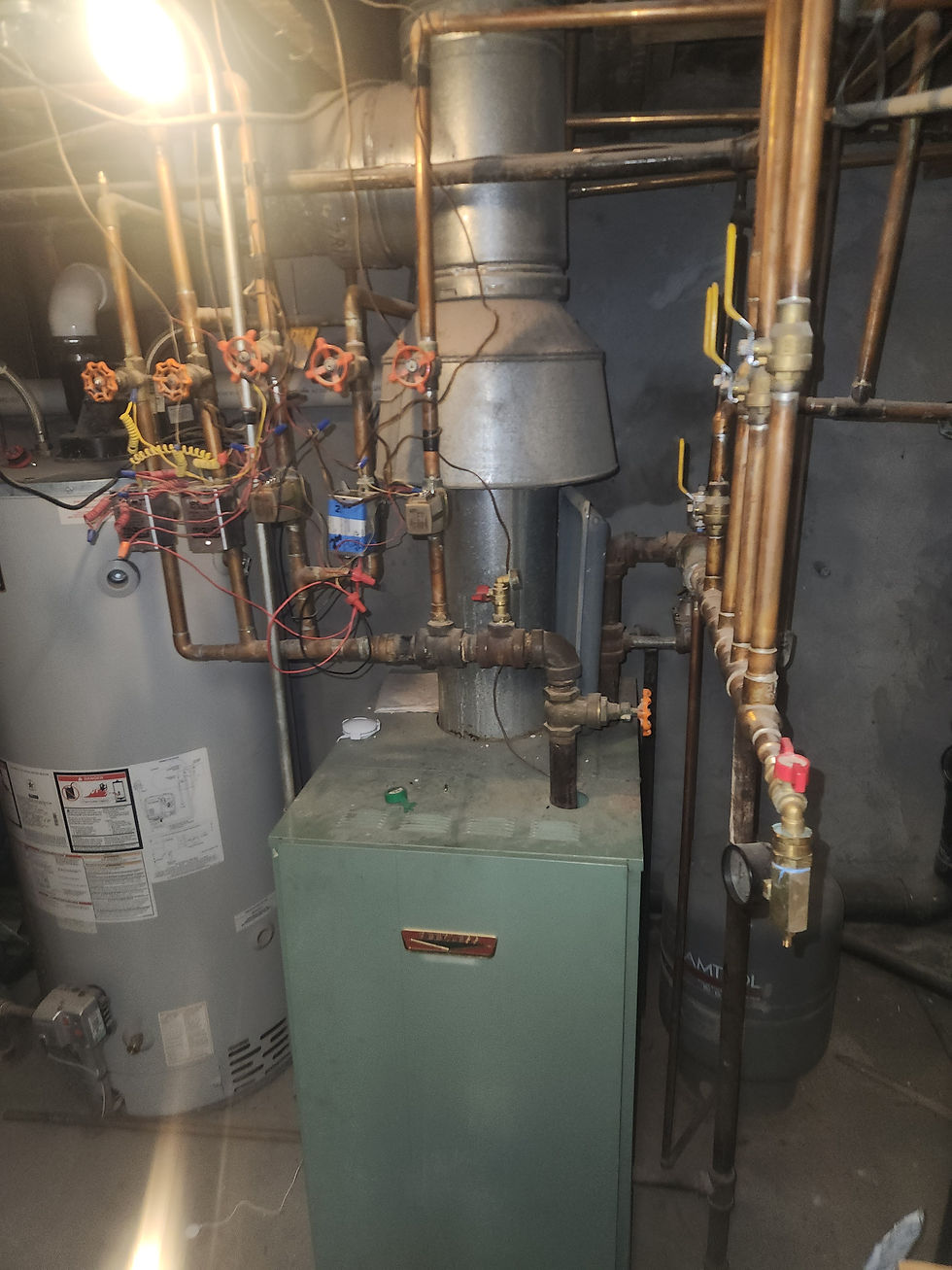
Before

During
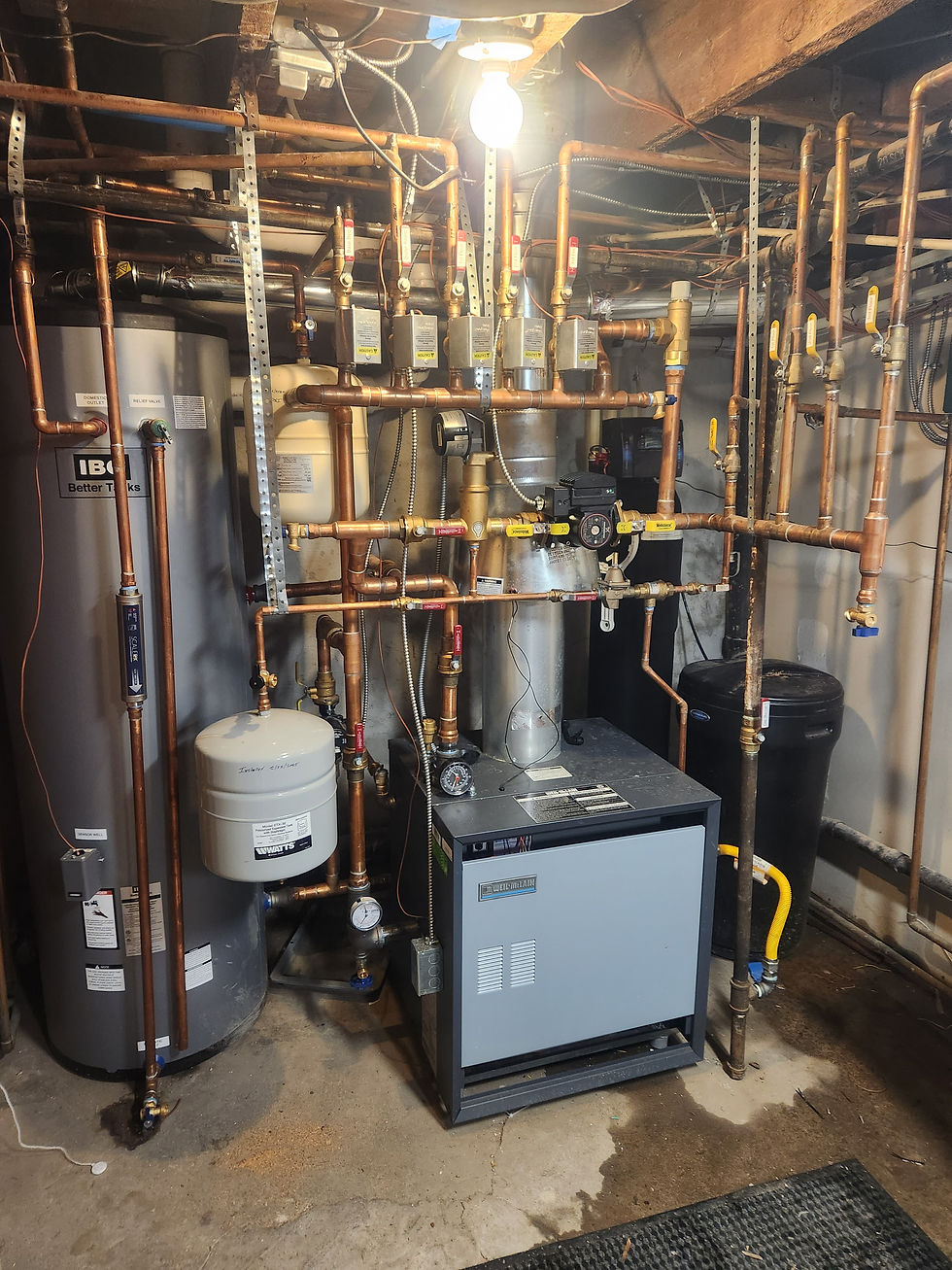
After


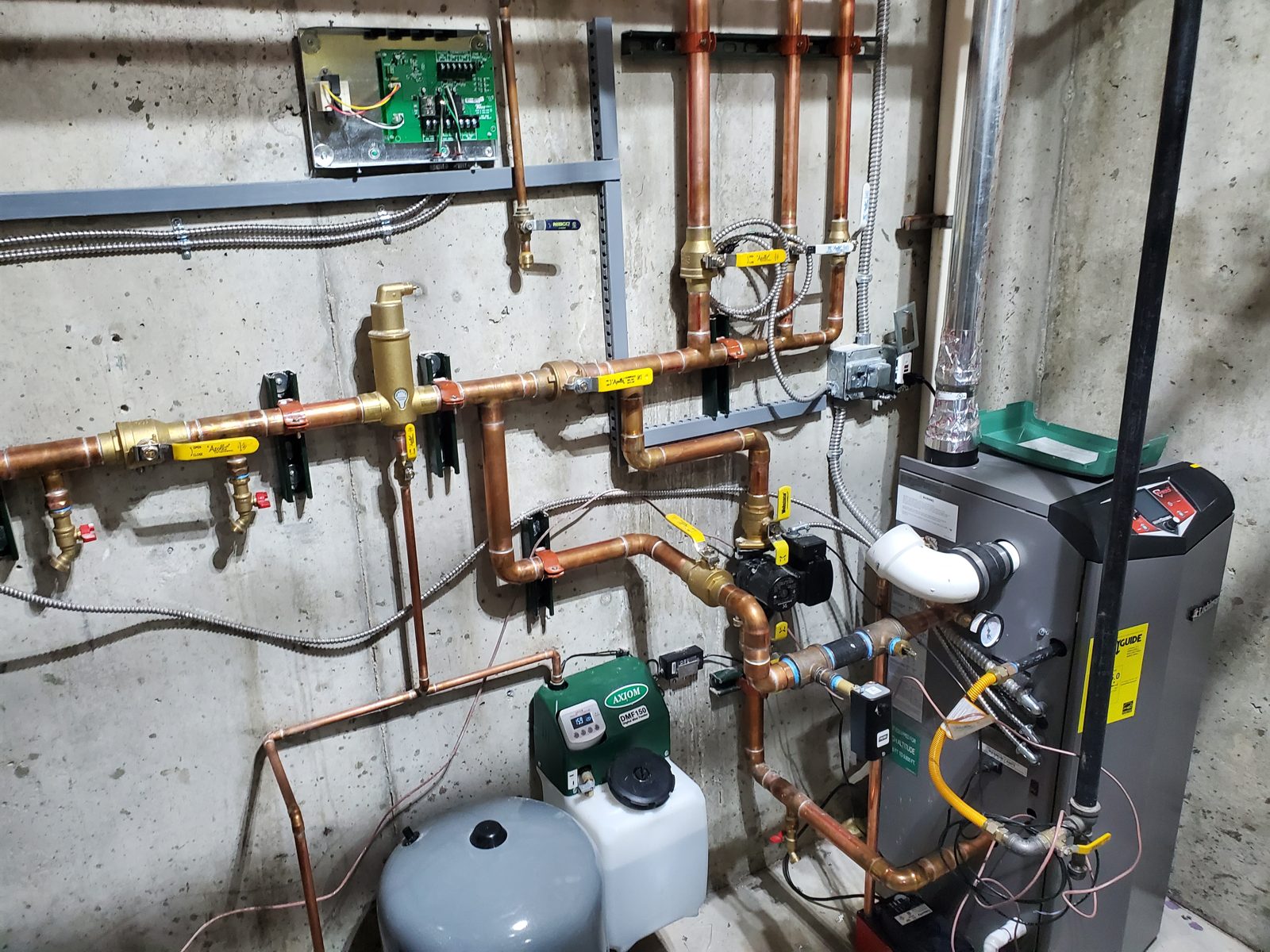
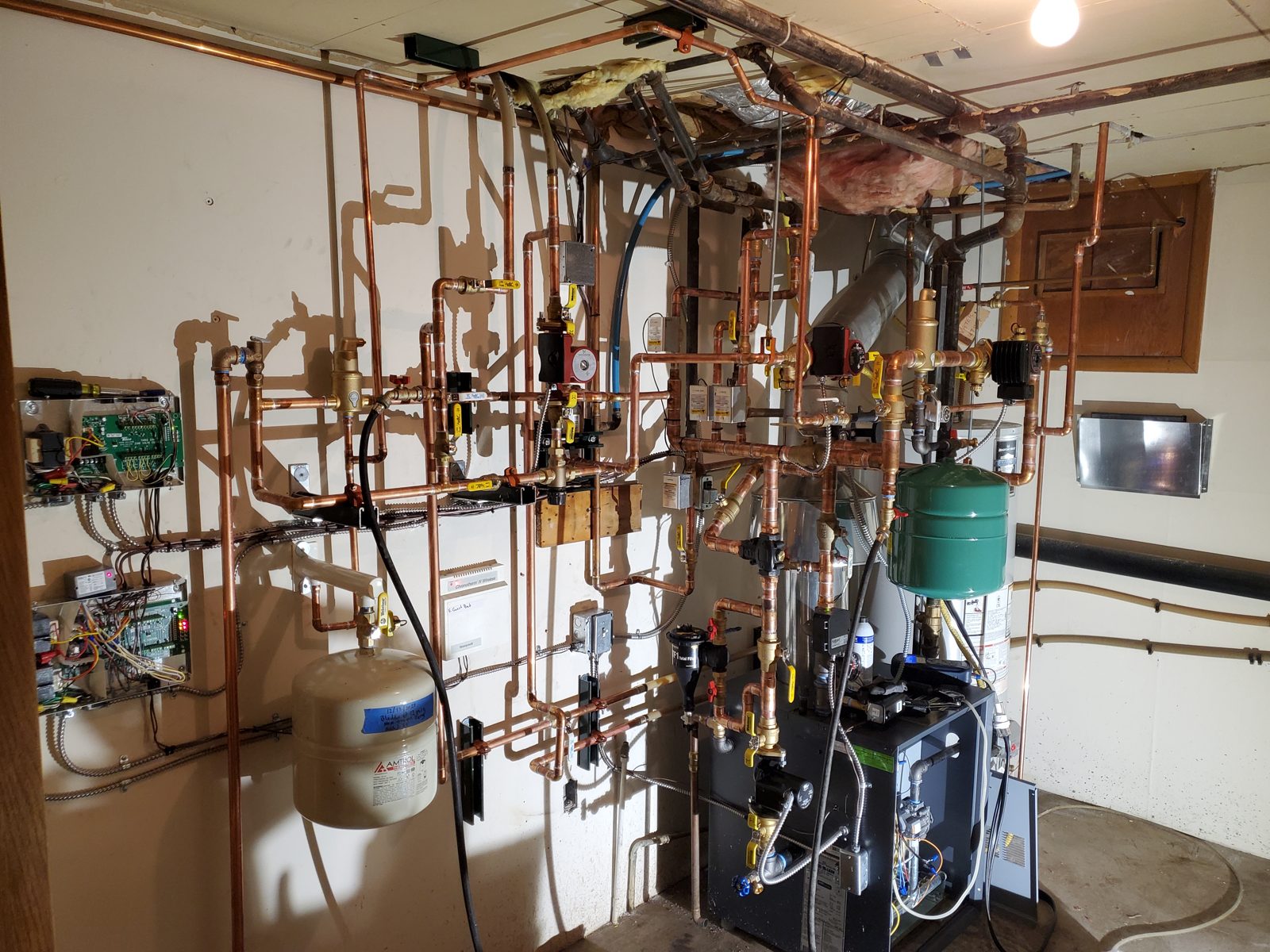
Our Approach
Boiler replacement in Littleton and the Denver metro
Most of the boilers we replace are two to three times larger than the house needs. That's not a brand problem — it's a sizing problem, and it's why so many Denver-area boilers short-cycle their way to an early death. Every ByDesign boiler replacement starts with a room-by-room heat loss of your actual house, because the right size is almost never the size of the old nameplate.
Altitude matters here too. A boiler rated at sea level loses capacity by the time it's working in Littleton, Highlands Ranch, or Evergreen, and the derate belongs in the math before the equipment is ordered — not discovered the first cold week. High-efficiency condensing boilers only deliver their rated efficiency when the system around them lets them condense, so we design the whole loop, not just the box on the wall.
Every replacement ends with a commissioning report you keep: measured temperatures, pressures, and combustion numbers, so you know what "right" looked like on day one. Read what customers say on our reviews page, or start with a site visit— no charge for the conversation.
When to Replace
Signs your boiler may need replacement
The signs that actually matter are structural, not calendar-based. Repeat failures in the same subsystem — a control that keeps cooking, a circulator that keeps seizing — usually mean the underlying cause was never found. A leaking heat exchanger deserves a distinction most quotes skip: a seep at a cast iron section seal can sometimes be drawn back up or resealed, but a cracked section, or a crack through the block itself, is finished, and no sealant poured into the system changes that. Obsolete parts end boilers too. Plenty are mechanically sound and functionally dead because the control board or gas valve is a multi-week special order. Add rising repair frequency, an inability to carry the house on a design day, and combustion numbers that will not hold where they belong.
Age is a multiplier, not a verdict. An old boiler with a cracked section, obsolete controls and a rising repair history is an easy call. The same age with a sound block, available parts and clean combustion numbers is not a reason to do anything — and that is what you will be told.
Repair or Replace
Boiler repair or replacement
Repair usually wins when the heat exchanger is sound, parts are still available, and the failure is a discrete component rather than a pattern. A gas valve, a circulator, an ignition module, a control board, an expansion tank — these are ordinary maintenance items on equipment with service life left. Repair also wins when the boiler suits the system it serves. A cast iron boiler on a high-temperature radiator system built for it is a good pairing, and swapping it for something that does not suit that distribution is a downgrade dressed up as an upgrade. Replacement makes sense when the exchanger is cracked or leaking through the casting, when obsolete controls cannot be sourced, or when a repair starts approaching a meaningful share of replacement — at that point you are buying a short warranty on old equipment instead of a long one on new.
ByDesign does not lead with replacement. The inspection comes first and the recommendation follows what it finds — including fixing the boiler you have, or leaving it alone and revisiting in a few years. This is a one-person shop that runs on referrals. Selling a boiler nobody needed is a bad trade against that.
The Process
How a boiler replacement actually runs
1 — Site visit. The whole mechanical room, not just the boiler: existing equipment and its condition, near-boiler piping, zone valves or zone pumps, controls and thermostats, the venting route and what it shares, the gas line and what else is on it, available electrical, and how equipment physically gets in and out. 2 — Heat loss and system analysis. Room-by-room heat loss on the actual building, plus what the emitters can deliver and at what water temperature. 3 — Equipment selection, made against the system rather than a dealer agreement. 4 — Mechanical design. Piping, pumping and hydraulic separation, venting route, control strategy, condensate. Written down before anything is cut. 5 — Installation, with every zone labeled supply and return. 6 — Startup and commissioning: fill, purge, pressurize, combustion set with an analyzer at this altitude, every zone proven, baseline documented. 7 — Owner walkthrough, and the paperwork stays with the house.
You will be told before work starts how long the house is expected to be without heat, and what happens if the schedule slips. In a Colorado winter that is the part that actually matters.
What Drives Cost
What affects the cost of a boiler replacement
Two boiler replacements on the same street can be entirely different jobs. The boiler is one line on the quote; everything it connects to is the rest of it. The drivers: equipment type and the output the building actually requires. Venting — whether the new appliance can use what is there, or needs a compliant route across a finished basement, or a chimney lined or abandoned. Near-boiler piping, which on older Front Range housing has usually accumulated decades of modifications and gets rebuilt. Pumps and hydraulic separation. Zone count, and whether zones run on valves or their own circulators. Controls, and whether existing thermostats can work with modulating equipment. An indirect water heater, which brings a tank, a zone and control changes into scope. Gas line capacity with everything else in the house running. Electrical at the equipment. Condensate neutralization and a code-compliant path to a drain. Permits and inspection. Mechanical room access. And the condition of the existing system, which is the single biggest reason two similar houses quote differently.
This is also why a quote that comes in well under the others is worth reading line by line rather than dismissing or accepting. Sometimes it genuinely is a simpler scope. Sometimes an item above has not been counted.